Bias Tape vs. Ribbon vs. String: Choosing the Best Bunting Binding
You have a stack of triangles cut, pressed and waiting. The only decision left is the one that decides almost everything else: what runs along the top and holds the whole thing together. Pick the wrong binding and your bunting sags into a sad grey swoop, frays in the rain, or costs more than the fabric did. Pick the right one and it hangs like it was always meant to be there.
Bias tape, ribbon and string are the three workhorses. Each behaves differently under weight, weather and washing, and each gives a distinct look. Here is how they actually compare.
Start With What the Binding Has to Do
Binding is not decoration bolted on at the end. Along the top edge, it is a load-bearing seam. It carries the weight of every flag across the span, takes the strain at the points where you tie it off, and absorbs the friction of being folded, stored and rehung. A heavy cotton flag on a thin string will drag; a stiff ribbon on a long run will fight every curve.
Before choosing, answer three questions: how heavy are the flags, how far does the run stretch, and where will it live? A five-metre run of light cotton indoors asks far less of its binding than a two-metre run of lined canvas outside a front door.
The three options at a glance
- Bias tape — fabric cut on the diagonal, so it has a little give. Sold as single-fold or double-fold, in cotton, poly-cotton blends and dozens of colours. It wraps the raw top edge of each flag and disappears into the fabric.
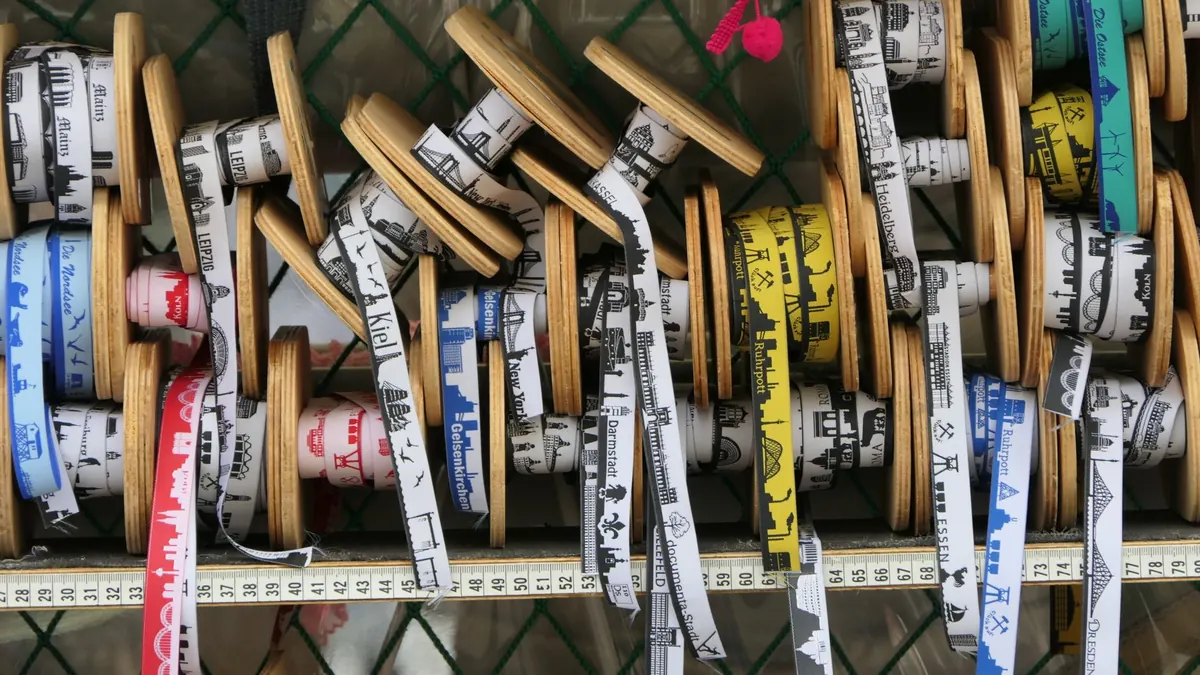
- Ribbon — woven with finished edges on both sides. Grosgrain has a fine rib and holds its shape; satin is smooth and slippery; velvet and printed ribbons are pure decoration. No folding required.
- String — cotton string, baker's twine, jute or hemp. The flags are folded over it or threaded onto it, usually with gaps between them.
Cost: What You Are Really Paying For
String wins on price almost every time. A large ball of jute or cotton twine costs very little and will bind metres of bunting with change left over. If you are making ten metres for a one-off party, that matters.
Ribbon sits in the middle, but the price climbs steeply with width. Narrow grosgrain is cheap; wide satin or velvet is not, and you need roughly the full finished length of the bunting plus a generous tail at each end for tying. Add 30 to 40 centimetres at each end and you will not run short halfway through a run.
Bias tape is inexpensive in basic cotton, and making your own from a half metre of matching fabric costs little beyond the time. That said, wider double-fold bias tape in a specific colour can be harder to find than ribbon, and special orders add up. If you are binding a lot of bunting in one fabric, cutting your own bias strips is usually the cheapest way to get an exact match.
Durability Indoors and Out
Indoors, all three will serve you well for years if stored sensibly. The differences show up outdoors.
Natural fibres — cotton string, jute, hemp, and cotton bias tape — absorb moisture. Left out through damp weeks, they can mildew, weaken and eventually break. Synthetic grosgrain ribbon resists rot and shrugs off a shower, but cut ends will fray if you leave them raw, and satin ribbon creases badly and shows every water spot.
For anything that will hang outside for a season rather than an afternoon, choose a synthetic grosgrain ribbon or a poly-cotton bias tape, seal cut ribbon ends over a flame or with a dot of fray-check, and plan to bring the bunting in during the worst weather. For a single outdoor event, string is perfectly adequate and much easier to replace.
Whichever you choose, washability matters if the bunting will be used again. Bias tape and ribbon survive a cool hand wash; jute and hemp do not.
Drape: How It Hangs
This is where the choice becomes visible. Bias tape is soft and follows a curve, so it produces the gentle, even swag most people picture when they think of bunting. Ribbon depends entirely on the type: grosgrain holds a straighter line and resists sagging over long spans, which is useful when you want a crisp, even row, while satin flops and twists.
String gives the most relaxed result. Because the flags slide unless you knot them in place, string lets you bunch the bunting up or spread it out, and it naturally forms a deep curve. On a long run, though, string stretches and the middle dips lower than you planned.
The Look: Crisp, Soft or Rustic
Bias tape reads as tailored and almost invisible — the eye sees the flags, not the binding. That is exactly what you want when the fabric is the star, or when bunting is part of a tidy nursery or a shop display.
Ribbon reads as deliberate. A striped grosgrain or a satin band becomes part of the design, which is lovely for a birthday or a wedding, but it does compete with busy prints.
String reads as rustic and informal: garden parties, market stalls, barn weddings, kitchens. The gaps between flags are part of the charm.
Matching Binding to the Job
- Indoor, fabric-led, washable: double-fold bias tape, stitched once through all layers.
- Indoor, decorative and quick: grosgrain ribbon, folded over the flag tops and edge-stitched on both sides.
- Outdoor, one afternoon: cotton string or twine with knots to space the flags.
- Outdoor, whole season: synthetic grosgrain ribbon, with sealed ends.
- Long or heavy runs: bias tape or grosgrain, and add a tie point in the middle so the span does not carry all the weight.
- Rustic garden or market stall: jute twine, accepting that it is a short-life material.
Before You Thread the Machine
Pre-wash and press cotton bias tape and any ribbon you plan to launder, so the binding and the flags shrink together rather than puckering later. Test your stitch on a scrap flag first: a slightly longer stitch length keeps lightweight cotton from rippling when it is pulled tight against the binding.
Whichever option you choose, leave yourself a long tail at each end for tying, reinforce the two ends of the run with a second line of stitching, and store the finished bunting rolled rather than folded. Rolled bunting hangs straight the next time you take it out, and it will survive a lot more seasons than you expect.
Photo: Don Horror / Pexels